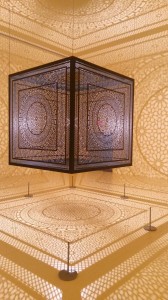
Now Sona is not only having a screening of the films for an American audience, but has tied it into a new exhibition by the talented Anila Quayyum Agha, who has created an installation that conjures up the spirit of Spain’s Alhambra Palace, where a thousand years ago Islamic and Christian traditions thrived in coexistence.
A square black cube of steel weighing some 600 lbs has been laser cut by Anila into filigree work like that of a jali screen, so that the light from a single bulb inside creates a shimmering effect around the yellow room. (I did ask her how she was ever going to change the bulb…)
And Sona is also putting on a Night at the Museum party, hosted by my old friend Bee Taylor and his House Of Honey collective, when more light projections will be played around the atrium of the building itself.
The fact that outside it’s blowing a Boston snowstorm won’t stop some determined partying.
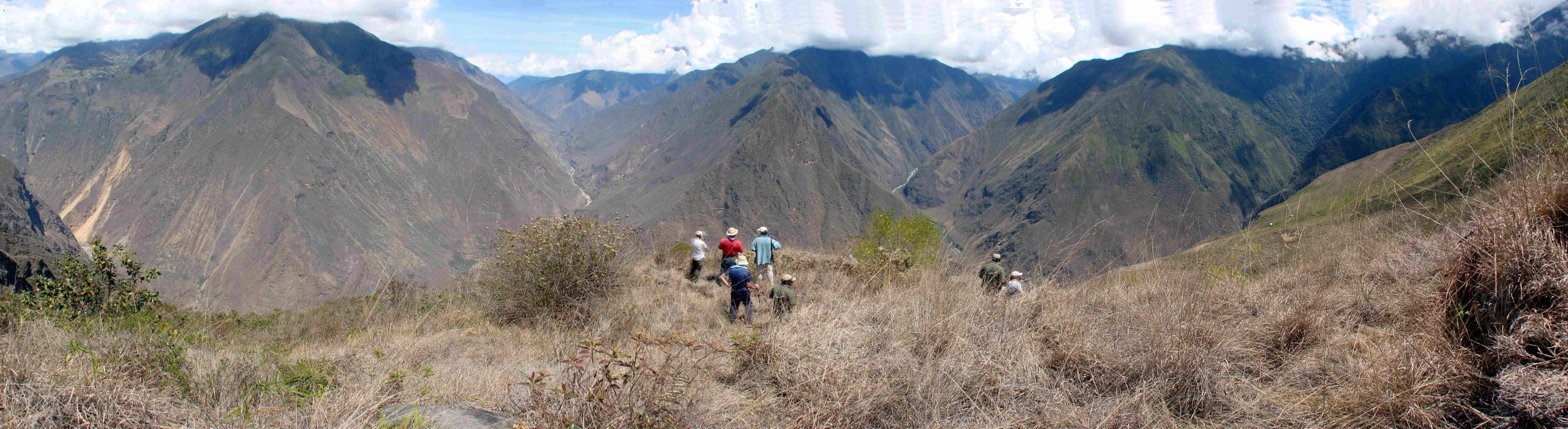
Of all the ancient civilisations, we know least about Peru because, as an illiterate society, they had no writing. They did, however, leave quipus, elaborate knotted cords mentioned by the Spanish chroniclers, which have still not been fully deciphered. These remain one of the most tantalising challenges in archaeology.
.
There are around 600 known quipus around the world, either in museums or private collections. Some of these quipus follow a straightforward numerical pattern, as if itemising goods. Others are more random and difficult to interpret. And even with the numerical quipu, we have no way of knowing what the numbers refer to, as for the vast majority there is no provenance – the quipus have arrived in collections from dealers, from the booty of conquistadors, from looted tombs, or by accident.
We long for the pre-Columbian civilisations to be able to speak to us direct from beyond the grave: is there some Homeric tale, some Peruvian Gilgamesh, of which we know nothing? Yet there is a danger that our overwhelming desire for the quipu to be proved a form of language could force us into unnatural contortions to prove that what may still just be an accounting device is actually much more.
Long-standing readers of this blog will know that I rarely touch on films – despite being, among other things, a filmmaker.
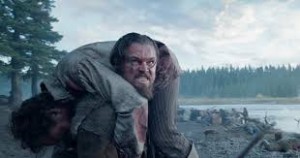
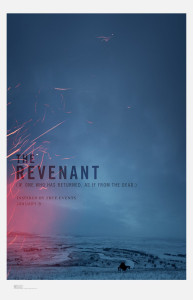
But then The Revenant is a rare film and moreover, a film about wilderness, the exploration of which is very much the theme of this blog.
.
It is also a reminder of how films need not be formulaic; how a bold director can rework and reimagine a mythic landscape – in this case, a wild west, or perhaps more accurately a wild north as we are in American fur trapping country of a brutal cold.
Alejandro G. Iñárritu finds the lyrical interstices of landscape. The moment you look up into the trees or the mountains. Most directors use a landscape shot to frame a sequence, usually at the start and end – as Quentin Tarantino does in his new Western, The Hateful Eight. Iñárritu edits his landscape shots to disconcert the viewer during the scene – to give the suggestion that the story is much bigger than the human one.
In some ways, his rule-breaking reminds me of what Terrence Malick did in Days Of Heaven – and like that film, a different way of working prompted mutiny from some of his crew. Film-making is so often done by default – there’s an elegant shorthand that has been involved for every type of sequence or narrative – that if anyone tries to escape that, they are rolling a rock uphill or, like Herzog in another movie that broke the mould, trying to take a ship over the mountain.
Iñárritu already showed in Birdman that he has a virtuoso mastery of camera and narrative rhythm (and ability to win prizes, which he certainly should for this); but whereas that was a lighter, theatrical piece, here he applies his talents to an elemental story of survival and revenge. DiCaprio holds it together well and Tom Hardy is a magnificently gnarly Texan; Domhnall Gleason’s captain has a documentary plainness to him that is as good as anything in Barry Lyndon, a film with similar lacunae of still moments.
This is a film about what it’s really like to engage with wilderness – the bloodiness of it and the bloody mindedness needed to survive. And of the beauty of elemental moments. It’s not a film for the fainthearted – but then they never did get out and about much anyway.
——————
The Revenant is released tomorrow on Xmas Day in the States, about the least appropriate festive film of all time (though The Hateful Eight is released the same day); and in the UK in the New Year. see trailer
Every year brings new theories about Stonehenge – some loopy like the one I covered in an earlier blog about the idea that Stonehenge was a platform monument.
But these discoveries in Wales come under the auspices of the respected Mike Parker Pearson. And while it has long been known that the bluestones came from the Preseli Hills, the idea that there was an earlier monument in Wales, which was re-cycled to form Stonehenge, is a fascinating one.
It comes about from the discrepancy in dates. The Craig Rhos-y-felin bluestones seem to have been extracted around 3400 BC – but not erected in Stonehenge until 500 years later, in 2900 BC. While Wales is some way from the Salisbury plain, it can’t, the theory goes, have taken a full 500 years to transport them. So there may initially have been a Welsh monument using the stones, which was later recycled by the builders of Stonehenge who may have valued their provenance.
The possible method of extraction is also fascinating. “They only had to insert wooden wedges into the cracks between the pillars and then let the Welsh rain do the rest by swelling the wood to ease each pillar off the rock face” said Dr Josh Pollard of the University of Southampton.
This is all highly speculative. But the investigation of a possible site for the Welsh monument is proceeding apace. Professor Kate Welham of Bournemouth University thinks the ruins of any dismantled monument are likely to lie somewhere between the two megalith quarries in the Preseli Hills. She said: “We’ve been conducting geophysical surveys, trial excavations and aerial photographic analysis throughout the area and we think we have the most likely spot. The results are very promising – we may find something big in 2016.”
British Egyptologist Nicholas Reeves believes Tutankhamum may have been rushed into the outer chamber of Nefertiti’s tomb.
.
Not quite sure how they work out these percentages. Last time my wife said she was 96% certain about something, she was wrong. But this is so clearly an extraordinary story that worth following closely. For researchers in Egypt claim there is a 90% chance that hidden chambers will be found within King Tutankhamun’s tomb, based on the preliminary results of a new exploration of the 3,300-year-old mausoleum.
One researcher has theorised that the remains of Queen Nefertiti may be inside – which, given she is so famous, hasn’t been a bad speculation to make for the publicity.
Egypt began the search for the hidden chamber last week. Announcing the results of three days of testing in Luxor, the antiquities minister, Mamdouh el-Damati, said the findings would be sent to Japan for a month-long analysis before the search is resumed.
British Egyptologist Nicholas Reeves theorises that Tutankhamun, who died at the age of 19 in 1324 BC after just nine years on the throne, may have been rushed into an outer chamber of what was originally Nefertiti’s tomb. Reeves reached his theory after high-resolution images discovered what he said were straight lines in Tutankhamun’s tomb. These lines, previously hidden by colour and the stones’ texture, indicate the presence of a sealed chamber, he said.
Nefertiti was the first wife of Akhenaten, who unsuccessfully attempted to switch Egypt to an early form of monotheism. Akhenaten was succeeded by a pharaoh referred to as Smenkhare and then Tutankhamun, who is widely believed to have been Akhenaten’s son.
Tut, Nefertiti and Akhenaten’s family ruled Egypt during one of its most turbulent periods, which ended with a military takeover by Egypt’s top general , Horemheb. The whole family’s names were wiped out from official records later on. Reeves, who is professor of archaeology at the University of Arizona, believes that Smenkhare is actually Nefertiti.
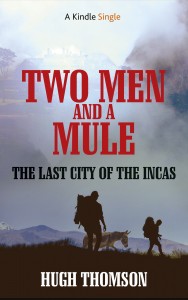
For those who might like to have an account of the Two Men and a Mule radio shows in a hard cover – or at least on a Kindle, today’s equivalent – with lots of added value detail about everything from Gene Savoy to the new Wari findings there, check out my new publication here.
.
For less than the price of a cappuccino – let alone of a coca tea – relive everything from Washington’s digestive habits to the noise an oropendola bird makes – and travel to Espíritu Pampa, one of the last Inca ruins left that is still best reached with a mule.
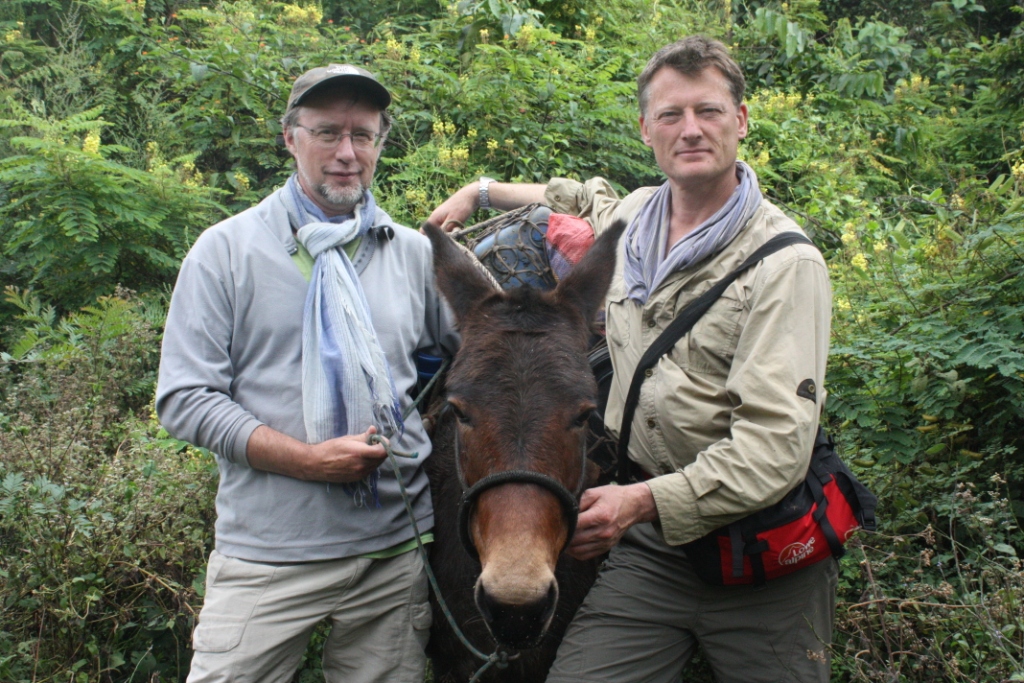
I’ve known the writer and explorer Benedict Allen for some years, but until the BBC commissioned us to undertake an adventurous journey together, I had never travelled with him.
You can hear the results on BBC Radio Four – see the BBC website for Two Men And A Mule – a spanking new three-part series in which we introduce our co-star Washington to the world.
.
For the first two programmes we travel down from the Andes towards the Amazon and Espíritu Pampa, the very last city of the Incas, which they built at the lowest level of the cloud forest, almost in the jungle. It is still one of the last ruins left in Peru best reached by mule.
.
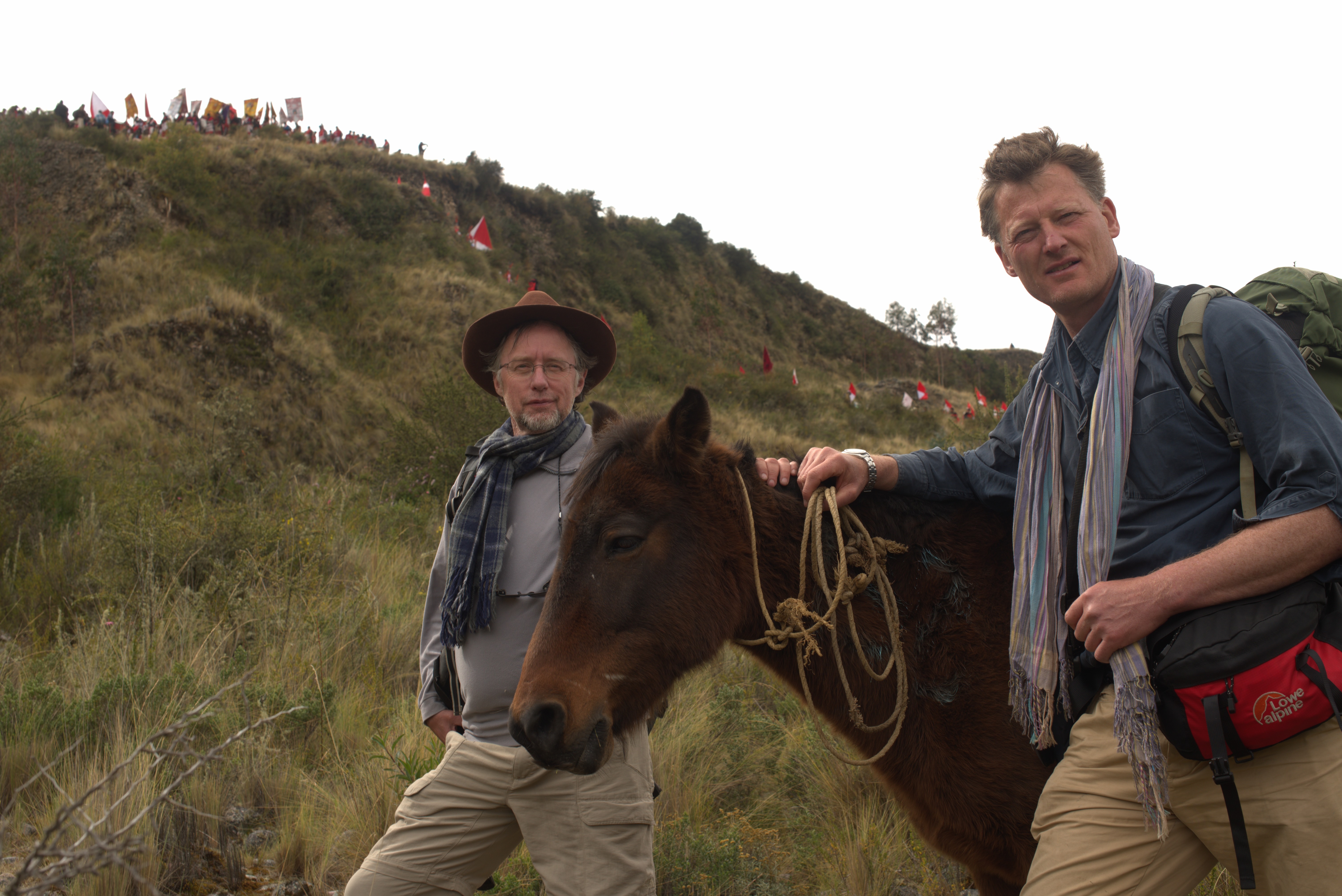
Then for the last programme we go to the great festival of the Andes, Qoyllurit’i, and take the pilgrimage out through the night for a momentous dawn ceremony.
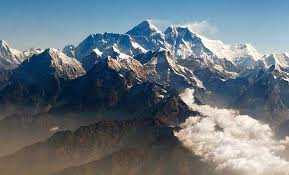
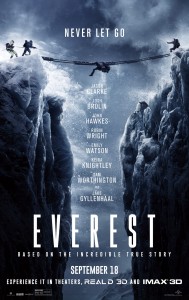
Everest as a film has perhaps been unfairly criticised for having some of the messiness of a real-life expedition – too many characters and an untidy ending – faults (and strengths) it shares with the other adaptation made from a Jon Krakauer book, Into The Wild. And it’s true there are moments the only way you can tell the men with frozen beards apart is by the colour of their product placement North Face jackets.
.
The class British scriptwriters – William Nicholson and Simon Beaufoy – have fashioned a story which ostensibly has no links with the Krakauer book, but given that it was his Into Thin Air which made the 1996 tragedy on Everest so famous, his shadow looms large over it. He also makes an appearance in the film as an embedded journalist in the team who accompanies them to the summit.
The film hits one nail hard on the head – that some of the dangers which arise are the consequence of the new phenomenon of commercial guided expeditions up Everest, so that less competent mountaineers are able to attempt a summit they should arguably not be on. But they fail to bring out one crucial argument in Krakauer’s book: whereas in the past all members of a team would look out for one another, now the guides look out for the clients but who is looking out for the guides? Of those who die on screen in the film, three are guides and two clients.
There is one crucial moment when lead guide Rob Hall has an uncharacteristic failure of judgement and allows himself to escort a client up to the summit way past the cut-off point when they should already be returning; the sort of misjudgement that is easy to happen when people are hypoxic and under extraordinary stress. But also one that occurs when you are no longer dealing with a band of brothers but rather of responsible uncles with their nephews.
The filmmakers were lucky to have David Brashears on board, both because of his presence on Everest in 1996 at the time the tragedy unfolded (Brashears was making an IMAX film and his character is played by an actor in this one), and for his help on how on earth you make a movie at such challenging altitudes. While some sections were shot on Everest itself – in mid January, so freezing temperatures – which cinematographer Salvatore Totino described as extraordinarily difficult in the Hollywood Reporter– the Hillary Step, where much of the most intense dramatic action occurs, was recreated at Pinewood. As the second unit crew were shooting some remaining scenes of the film at Camp II on Everest, an avalanche struck, killing 16 Sherpa guides with other expeditions.
A facile criticism of the film is that this is such an exclusively male affair. This just mirrors the actual expeditions which were almost exclusively male – although it is true that the two female climbers are given paper thin characterisation – but also is a reflection of how a tunnel-visioned imperative to get to the top of something, regardless of disruption to family, is a not very commendable part of the male psyche. Scenes of the two wives back home – Rob Hall’s is played by Keira Knightley – and the way they react as events unfold on the mountain are handled deftly and movingly by Icelandic director Baltasar Kormákur, an interesting choice, given his indie background. The wives’ reactions are not nearly as forthright as those of the widows of some Everest fatalities, who have sometimes expressed bitterness in documentaries at the way their husbands put summits before family.
The movie succeeds in many ways – a particularly fine performance by Jake Gyllenhaal as rival, maverick guide Scott Fischer, and a stunning recapturing of the landscape of Nepal. See it in 3-D, so that, in the best traditions of filmmaking, the movie takes you there in a way which means you never, ever have to do it in real life – thank God. For one thing, the film amply demonstrates is that the death toll on Everest is not worth it. Anyone who wants to experience a sublime mountain moment can do so elsewhere below the death zone without putting their own lives – and others – at risk.
Before we went, Pakistan had always looked like it was going to be difficult. It took three months just to get the filming visas even though what we were making was not on a politically sensitive subject; we were there to explore the sometimes forgotten ancient history of the country.
.
.
.
Security was to be paramount. The mosque where we filmed sufi musicians had been suicide bombed in 2010 by the Taliban with the death of 42 worshippers. A few weeks after we had planned to film the border crossing at Wagah, where Pakistani and Indian guards try to compete with each other for the most militaristic display, it too was suicide bombed. While filming at several remote old Buddhist monasteries, we were interrupted courteously but firmly by security questioning our right to film.
The key to filming in Pakistan was, as ever, finding a fixer who could deliver – in our case Khalid Waseem, based in Rawalpindi, who came recommended by several other productions. This meant that most of the cultural institutions where we wanted to film did not charge a fee. In Lahore, they let us light up some of the Mughal palaces at night for some spectacular sequences and turned on all the disused fountains in the pleasure gardens. We were able to use drone cameras and satellite phones and, with an immensely experienced cameraman, Spike Geilinger, the drone cameras proved invaluable for getting an overview of large archaeological remains like the ancient Indus city of Harappa.
.
For one memorable sequence, we took boats across a remote lake in the Buddhist heartland around Gandhara – a fascinating area, which still shows the influence of Alexander the Great and the Greeks when they arrived and took this new religion to their heart. Sadly, many of the old Buddhist sites have now been mutilated, but some of the small remote ones still survive.
.
Our presenter, Sona Datta, who has worked as a curator at the British Museum, knows Pakistan well. The dramas played out by the vanished cultures of the Indus – the battle with climate change, the clash of civilisations – are still being played out today and Sona and I both wanted to ensure the series addressed this; so we interviewed political commentator Ahmed Rashid as well as contemporary artists like the Biennale–exhibiting star of Pakistani art, Rashid Rana.
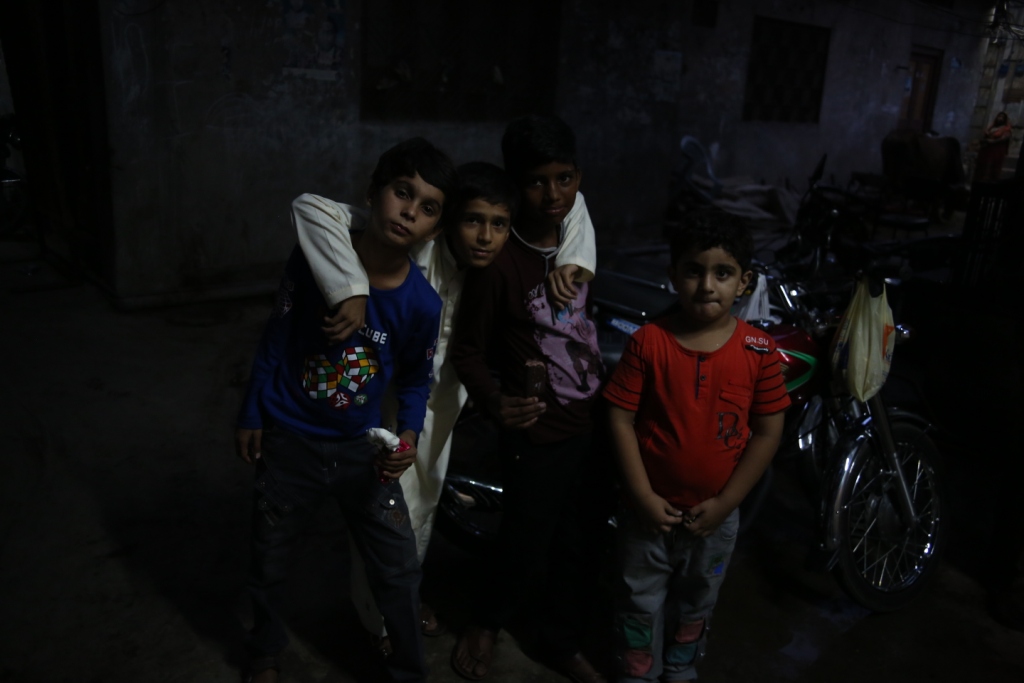
boys in Lahore Old City by (c) Hugh Thomson 2015
Lahore is one of those cities of the subcontinent like Old Delhi or Varanasi where a shot presents itself almost in every direction – particularly after dark, when what Kipling called ‘the city of dreadful night’ comes alive in smoke-filled narrow alleyways lit up by the Badshahi Mosque beyond. For Eid, we filmed from rickshaws down those alleys as camels and all the streetlife of Pakistani crowded around us, before eating goat’s brain curry washed down with iced drinks of mint, cumin and salt in the havelis of the walled city.
.
For the other important role of any good fixer is to know how to schedule the last shot of each day near a decent restaurant.
Hugh Thomson is the Series Producer and Director of Treasures of the Indus, a 3-part series beginning on Monday August 31st on BBC 4 at 9.00 pm. Catch it on iPlayer
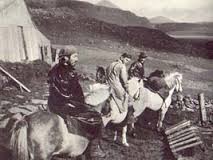
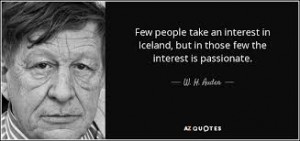
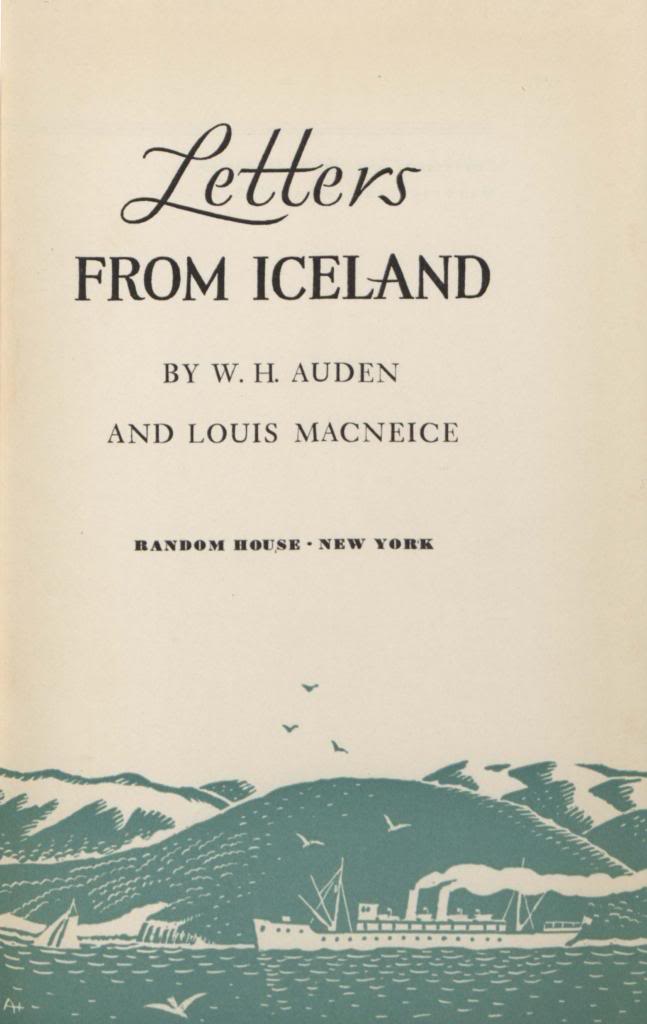
Difficult to be here without thinking of the travel book W.H. Auden and Louis MacNeice wrote in 1936 when they came. Letters from Iceland is a curious and in some ways very lazy book, which they threw together for Fabers at a time when such golden boys they could pretty much do anything they wanted.
So in some ways it’s a mischievous anti-travel book that tweaks the tale of more serious contemporaries like Peter Fleming. There’s quite a lot of ‘I can’t really be bothered to do this,’ with deliberately amateur black-and-white pictures. At one point they just bundle in a whole anthology of clippings from previous visitors to bulk it up a bit.
But it also signals a sea change in their own writing – in Iceland, they can loosen up, free from the pressures of being ‘the voices of their generation’ back home, a particular pressure on Auden. He had read Byron’s Don Juan on the boat over and the idea came to him (in a
bus when travelling across Iceland) that, for the first time, he could write some similar light verse, in the form of letters home to friends in England in which he could put ‘anything I could think of about Europe, literature, myself’ . And this lovely couplet about a place I’ve just visited as well:
‘In Seythisfjördur every schoolboy knows
That daylight in the summer never goes.’
MacNeice contributes much less to the book – some eighty-one pages out of the first edition’s two hundred forty – but has some equally effective couplets in his own verse letter which prefigures the great wartime Autumn Journal:
.
‘Here we can take a breath, sit back, admire
stills from the film of life, the frozen fire’
.
they rode on ponies around the glacier of Langjokull
There was a subtext to their visit as well. Some Nazi anthropologist were also visiting the island in an attempt to prove that it displayed pure, isolationist Aryan characteristics. The two poets tried to show in contrast that it was the model for a quiet, democratic nation, free from such shrill nationalistic yearnings. And it was in Iceland that Auden first heard the news about the civil war in Spain, and everything changed….
 Excited to be in Salem for a remarkably innovative weekend put together by Sona Datta and her colleagues at the Peabody Essex Museum.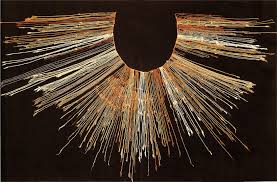
 Every year brings new theories about Stonehenge – some loopy like the one I covered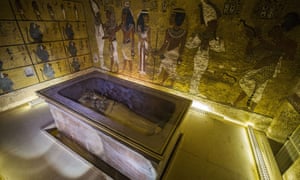
 The filmmakers were lucky to have David Brashears on board, both because of his presence on Everest in 1996 at the time the tragedy unfolded (Brashears was making an IMAX film and his character is played by an actor in this one), and for his help on how on earth you make a movie at such challenging altitudes. While some sections were shot on Everest itself – in mid January, so freezing temperatures – which cinematographer Salvatore Totino described as extraordinarily difficult in the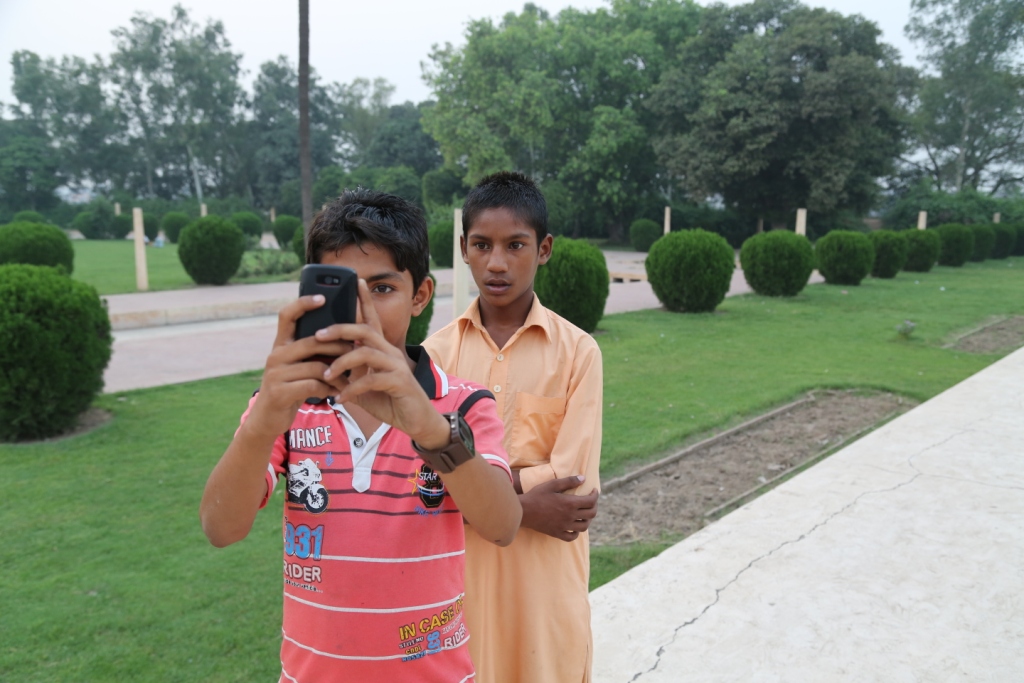
 .
.
 MacNeice contributes much less to the book – some eighty-one pages out of the first edition’s two hundred forty – but has some equally effective couplets in his own verse letter which prefigures the great wartime Autumn Journal: