
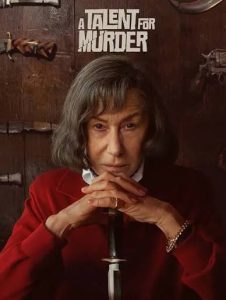
 The release this week of A Talent for Murder, a feature film dramatizing Patricia Highsmith’s life with a purely imaginary episode, has naturally focused attention again on her real life – which was arguably far more interesting.
20 years ago, I made the first documentary about Highsmith after her death. Many of her ex-lovers were then still alive and talked candidly, as did others who had known her. The BBC showed the documentary once, but were then prevented from doing so again by a legal challenge from her Swiss literary executors, embarrassed by the revelations that had been made about her private life.
It’s a shame for Highsmith: Her Secret Life, as we called the film, did much to illuminate the world of Ripley. It is easy to forget how radical it was for a woman author in 1950s America to write a novel in which a good looking man committed a murder and got away with it. Time Out described our film as ‘gliding through Highsmith’s life with the slickness of a Ripley novel’; the Observer liked its ‘daring commando-style’.
During her lifetime, Patricia Highsmith revealed very little about the turbulent personal impulses that shaped novels like The Talented Mr Ripley. She would consent to be interviewed for newspapers and film, but refuse to say anything of consequence; to the frustration of those like Craig Brown who recalled that ‘she was the least forthcoming of authors, and hated talking about her work.’
To the novelist Sarah Dunant, who travelled out to Switzerland to interview her, she stone-walled: ‘I don’t answer personal questions about myself or other people that I know, anymore than I give out people’s telephone numbers.’ She maintained the ideas and characters for her novels came to her like birds that she saw out of the corner of her eye, and bore little relation to events in her own life.
But just before her death in 1995, she had a change of heart, according to her friend and confidante Vivien de Bernardi, one of many who appeared in my film. She decided not to destroy the explicit journals she had kept throughout her adult life, but to leave them for a posthumous revelation of quite what had motivated some of the bleakest and most obsessive literature of the 20th century.
Those journals reveal the demons that drove her, helped by those friends whose telephone numbers she had once withheld, but who told me they now felt they had Highsmith’s own posthumous consent to come forward and talk.
I have rarely made a film where the contributors had such a polarised view of their subject. To some loyal friends, she was a tragic figure, pursued by those demons to the every end, whose talent excused her bad behaviour. Others were more forthright. Otto Penzler, one of her last American publishers, declared her to be one of the most odious women he had ever met, a misanthropic, racist alcoholic.
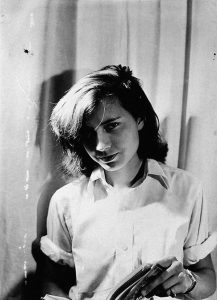 But he only knew her at the end. Highsmith underwent a poignant transformation from the ardent young Bohemian writer of the 1950s who embraced life, love and literature, to what one friend described as the ‘Wicked Old Witch of the West’.
What turned her into such a curmudgeon? One surprising revelation was that such an austere observer of the human condition (‘she is to men what the spider is to the fly’ ran the book blurbs) should have been such a hopeless romantic. It was her endless failed love affairs which soured her and turned her to the bottle.
Highsmith was ambivalent about her homosexuality, alternating between aggressive promiscuity, leaving a ‘trail of unmade beds behind her’, and guilt. At one point, with a view to getting married, she sought psychoanalytic treatment, considered in the 50s an appropriate and effective ‘cure’, but was left only with a large and much resented bill.
One of her many gay male friends, Alex Szogyi, told me she had ‘the boldness of the very shy’. The woman who could spend an entire party looking at the floor would also jump the previously heterosexual painter Ann Smith within minutes of meeting. She later gave Smith an egg timer with a note saying: ‘Dear Ann – the best things in life last at least three minutes – Love, Pat.’
It was said of Hitchcock, who adapted Highsmith’s first novel Strangers on a Train, that he filmed his love scenes as murder scenes, and his murder scenes as love scenes. Highsmith followed the same precept in her relationships. She had constant fantasies of revenge and possession which manifested themselves in her dreams and books.
One of her lovers, Marijane Meaker, revealed to me that ‘Pat always used her books to portray and murder the woman she had last been out with. After we broke up, she murdered me very brutally, in The Cry of the Owl, with a knife, several times.’ This Sweet Sickness, one of Highsmith’s finest and most neglected novels, was likewise based on Highsmith’s obsession for the beautiful and unobtainable Mary Ronin.
There was a curious and winning awkwardness about Highsmith that I found appealing. She did not for instance capitalise on Hitchcock’s interest in her work, refusing to visit him on the set of Strangers on a Train. She antagonised publishers and friends by her occasional brutal honesty with herself and others. She fell in love with married women who were never going to leave their husbands. And she drank.
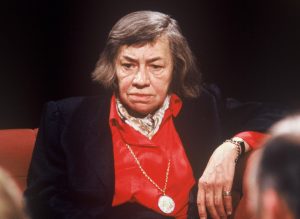 Quite how much she drank by the end was frightening. In her journals Highsmith wrote ‘I am attracted to the destructive for the same reason as I am attracted to alcohol. It has the power in a person of seeming to change the vision of the world.’
Marijane Meaker saw her towards the end of her life. It was thirty years since she had left Highsmith and being murdered by her in a novel. Meaker was horrified by what had happened to the woman she had once loved, who had now become bitter and paranoid, an alcoholic, barely able to get through the day without her bottle of Dewars.
When I talked to Ronald Blythe, the author of Akenfield, at his home in Suffolk near where he had known Patricia Highsmith, he told me that whenever he had been in the same room with her, he had felt ‘this blackness, this void’ which he had found very frightening.
Her work suffered as well. Her first novel, Strangers On A Train, was based on an idea of startling and brilliant simplicity – that two strangers swap murders, so that each appears motiveless. The Talented Mr Ripley took the idea a stage further – the murderer swapping identities with his victim. The Blunderer and This Sweet Sickness were further chilling essays in obsession and guilt.
But as she became older, the quality of her writing declined, not least because few literary editors dared stand up to her any more. ‘She wasn’t just tough,’ said one, Larry Ashmead, ‘she was Texas tough.’ The many Ripley sequels became a repetitive franchise. She had always been more popular in Europe than her native States; now Americans completely abandoned her. At the time of her death, she had no publisher in the States. When we made our film, she did not have the fame that the last two decades of movies like Carol (which we anticipated with an investigation of Highsmith’s real stalking of an older woman) and TV series have given her.
Little Tales of Misogyny, a book of short stories published at the height of the feminist movement in 1969, was controversial. Greatly admired by the generation of British writers like Martin Amis and Ian MacEwan who grew up sniffing their fingers, it attacked every shibboleth of the feminist sixties: the women portrayed in it were venal, possessive and often stupid; most died brutally. It was written in the aftermath of one of Highsmith’s unhappiest affairs, with a married woman who lived in Suffolk.
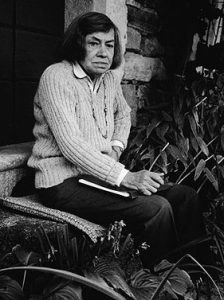 Yet Highsmith took no pleasure in the depiction of violent death. At their best, her books are concerned with the guilt the murderer feels before rather than after the crime; in its anticipation rather than execution.
Highsmith’s work matters because she is so steadfastly honest about the possessive capacity of guilt and romantic obsession in human relationships, whether gay or straight.
We used some sad lines from her journal to end our film: ‘Writing, of course, is a substitute for the life I cannot live, am unable to live.’