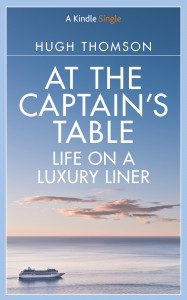
 At The Captain’s Table: Life on a Luxury Liner, Hugh Thomson (Kindle Singles £1.99). Round the world the soft way. For less than the price of a cappuccino grande, a frothy confection of a travel book with double shots of autobiography and world analysis thrown in. download it here.
I enjoyed writing this – light-hearted, it involves all the classic elements of comedy: life on the high seas, some rampant snobbery and even a marriage at the end. And I got to see a lot of intriguing places.
For those who haven’t come across Kindle Singles before, it’s an interesting Amazon initiative. Kindle have commissioned established figures like Stephen King, Jon Krakauer and Amy Tan to write shorter, novella-length books and put them in a special branded part of the store, so readers know they’re getting something that’s met a quality control threshold – unlike the self-published parts of Kindle. A development which may get traditional publishers very worried…
.
FROM THE BLURB: “Hugh Thomson had always wanted to travel right around the planet. He just never had the money. Until he realised he could do it on the world’s most expensive luxury cruise.
Mischievous and entertaining, this is the first book to be written about a new phenomenon – the strange and unreported world of small luxury cruise ships, so exclusive that if you need to ask how much they cost, you probably can’t afford them.
So don’t act like the Cruise Queen Bee who, when she received her invitation to the Captain’s table, wrote back giving her apologies and explaining, ‘I cannot accept your invitation as, on principle, I never eat with the staff.’ Buy the book and take your place as Hugh serves up tales that are clear-sighted about the rich and observant of the new world opening up on our horizons, powered by a supercharged 32,000 ton luxury liner, a microcosm of 21st-century life, with its superb engineering that almost, but not quite, overcomes all the indignities the natural world can throw at it.”

 .
.