
The BBC needed to appoint a visionary at a time of crisis. Instead they’ve appointed someone who is now starting as Director-General with no experience of broadcasting or journalism whatsoever.
Back last summer , I was the first to call publicly in print for Tim Davies’ resignation as BBC Director-General after his abject failure over a whole series of managerial cockups – and pointed out in the Spectator his complete lack of credentials for the job in the first place, given he had never made a programme. The only creative decision he was said to have ever made was to have told Pepsi to turn their cans from red to blue when he had been a PR executive; advice which failed, as sales did not increase.
He went within months – I can’t take any credit, as I suspect he is more likely to read Marketing Week than the Spectator – but in the usual way of the BBC, it’s taken until now to replace him. It’s never been an organisation to have a sense of urgency; only those who have worked there, like me, can appreciate the institutional inertia at management level, where executives can play musical chairs all day long without ever making a decision about the direction the organisation needs to take.
Today, after all the vacillation, a new Director-General is finally starting in his place.
So, given the crying need for a strong figure who can lead the BBC into licence renewal against a declining share of the viewing figures, who have they chosen?
Someone who commands respect in the organisation for their journalistic integrity and long programme-making record? Or someone who at least knows the industry well?
No. It took them four months to decide that the ideal candidate is someone who has no journalistic or broadcasting experience whatsoever.
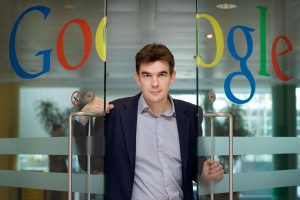 Step forward former Google executive Matt Brittin. When the Today programme ran a timid feature on his imminent appointment, they interviewed former Radio 4 controller Mark Damazer – an insider if ever there was one – who with breath-taking and unchallenged complacency declared that no journalistic or broadcasting experience was necessary; just sensible leadership capabilities to deal with the inevitable crisis management that will always follow.
Really? What the BBC so clearly needs is a Director-General who understands the very complex broadcasting ecosphere so well they can immediately go onto the front foot.
Let’s remember where we are at the moment. By the BBC’s own admission in a recent internal report, they are facing ‘permanent and irreversible trends’ that mean they cannot survive without a major overhaul, due to the rise of streaming. The young are no longer watching it and feel resentment at the licence fee; rumour has it that many of the older Charles Moore generation are not too happy with it either. That’s quite a pincer movement.
The real problem is not a digital issue that can be solved by someone who understands Google – it’s that while radio continues to be a strength, there’s a reason nobody’s watching BBC television, because so little of it is relevant or any good.
Television is a disaster area with nothing but repeats of Dad’s Army, the odd Saturday night entertainment show and endless police procedurals. No wonder audiences have gone to the streamers like Netflix in droves. The excellent wider news reports from Newsnight are wound down and the documentary department might as well not exist. BBC 4 likewise shows repeats with no original programming. There’s no sense of BBC Television being part of the conversation of national life and that is an issue that needs to be addressed head-on, not fudged with talk of ‘digital solutions’.
The BBC is at risk of turning into one of those old department stores that linger in the high streets of the country where everyone knows they are going to be closed soon and is waiting for the clearance sale – with a Director-General who is just managing decline.
What’s such a shame is that the BBC has the potential to become a dominant international player if it had the right leadership. The brand is one of the best known in the world – wherever I used to go in South America, people would talk admiringly about the ‘BBC de Londres’, and buy me a drink. BBC Verify is an excellent idea in a post-truth world where increasingly AI will make up the stories; while being sued by Donald Trump is for many a mark of respect. And there are some immensely talented programme makers and broadcasters endlessly frustrated by poor management at the top.
Opening up iPlayer to other public broadcasters like Channel 4 to make it a major rival to the streaming giants is an admirable ambition, but for that you will need content that people want to watch. Or it will go the way of the ill-fated BritBox project along the same lines (and there’s a reason you can’t remember what happened to that, not just the terrible name).
If they had brought in somebody from Netflix or HBO that might have made a bit of sense – someone with real streaming experience to beat the competition. Matt Brittin seems amiable and comes with an engaging techbro vibe. But that’s not enough to succeed, as Rishi Sunak found. Google at the end of the day is just a browser not a broadcaster, and the BBC would be wise to remember that, if it is going to hold a central place in the nation’s affections, it needs to justify it with great programmes not with digital add-ons.
So – fair question – what would I do if I was Director-General? Bring back the old Programme Review Board so that executives actually had to talk about the output rather than have Zoom meetings on where to store the paper clips. Radically expand the documentary department which has been starved for years and for much lower budgets than drama could tell us a great deal about what’s actually happening in Britain, in a way that Netflix doesn’t. Allow BBC Music and Arts to do a little more than just the old coffee table programme on the current show at the Royal Academy. Stop making so many dull police procedural dramas. Try to put the BBC at the centre of the national conversation again. And above all, make sure that staff feel that they are backed robustly by the leadership so that in the event of the inevitable crisis – because, as in politics, they will always occur in broadcasting – the Director-General is not like his predecessor felt to be running for cover to protect his own back, with the BBC Chair scurrying beside him. Traitors only works on screen.
Tim Davie left very little to show after five years for his £550,000 annual salary as he retires on a generous BBC pension. Let’s hope that Matt Brittin realises that the job entails a little bit more than smooth crisis management. Or like the hapless George Entwistle back in 2102, he may last only 54 days in the job – only a few days longer than Liz Truss.
Hugh Thomson won the Grierson Award for his series on India with William Dalrymple and has been BAFTA-nominated for the BBC.
Excellent piece Hugh.
Brought up on the BBC, I hardly ever watch or listen to it now and it’s a long, long time since I went to the BBC for news. Currently I access more accurate, .more immediate in depth content about Iran and more on Youtube, where all manner of experts report plus great journalists whose truth telling ways keep them out of mainstream media are found for free. How utterly appalling that the BBC commissioned ,but failed to show the BAFTA winning Gaza film. What a shameful state of affairs, emphasised further by their two hour ‘delay’ transmitting the BAFTA ceremony. That pretty much says it all.