All the book reviews below are for The Independent unless otherwise stated:
.
.
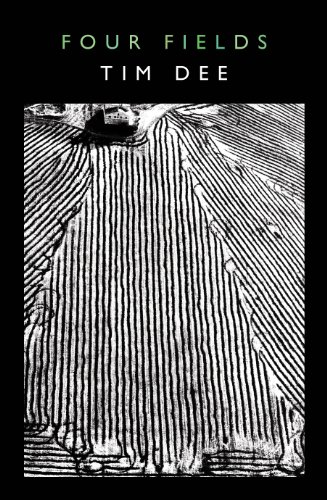
From the Fens to Chernobyl, this tour of turf shows the skills of a gifted, if sombre, naturalist.
.
.
.
.
.
.
.
Everest 1953: The Epic Story Of The First Ascent, By Mick Conefrey
Conefrey has written a magnificent book that deserves to become the definitive version: we cannot hope for a more human, funny or meticulous account of what was a very British expedition.
see full review. An edited version of this review appeared in The Independent.
.
 .
.It is impossible to write a book about Colombia, particularly the Magdalena river which runs to its heart, without invoking the presiding spirit of Gabriel García Márquez…….. This is travel writing at its best, with the memories a country creates about itself weaving with the author’s for a journey that pulses with an elegiac, penumbral light.
[see also longer unpublished version]
.
.
.
.
There have been more than 34,000 casualties in the Mexican drug war of the past decade. For a criminal conspiracy, the numbers beggar belief. It has been too easy for the world to step back and blame endemic Mexican violence and the American appetite for drugs.
.
Stone of Kings, By Gerard Helferich (Wall Street Journal)
The commodities market has always been vulnerable to the clash of civilizations. When the Spanish arrived in Mexico in 1519, the Aztec emperor Montezuma sent Cortez an offering of jade beads with the message, “These rich stones of chalchihuite”—Nahuatl for “herb-colored jewel”—”should be sent to your own Emperor, as they are of the greatest value, each one being esteemed more highly than quantities of gold.”
.
White Fever, By Jacek Hugo-Bader
You don’t want to use the roads in Siberia if you can possibly help it – which is why most travellers take the train. When Polish writer Jacek Hugo-Bader decides to give himself a 50th birthday present and “drive east alone across an entire continent”, emulating the rebel manifesto of his generation, Vanishing Point, what he gets is more like Mad Max on the steppes.
.
Unincorporated Persons in the Late Honda Dynasty, By Tony Hoagland
To be an accountant of the heart”, writes Tony Hoagland in a poem of the same name, “is the loneliest job in the world”. It is not one which Hoagland shirks. These are unflinching poems, looking at personal failure and human frailty…
.
.
.
.
.
.
This is a very odd but also engaging book. For a start, it is not written by Redmond O’Hanlon, despite his name appearing as one of the authors. Rudi Rotthier has written a profile of O’Hanlon and the publishers have clearly decided it will get more attention if thought to be autobiographical. The book is quite revealing enough. Indeed, one of the attractions of O’Hanlon is that, while some English travel writers value discretion to the point of self-effacement, he has always been both candid and funny.
.
 To a Mountain in Tibet, by Colin Thubron (Daily Telegraph)
There is a telling moment in one of Colin Thubron’s early films. He is travelling with a BBC crew along the Silk Road in China when he professes that he is tired of filming and needs to be alone. He turns aside and enters the desert for a moment of meditation; a moment that is recorded by the film crew, who are presumably still beside him.
The conflict between Thubron’s natural tendency to solitude and the travel writer’s need to communicate and share experience are what give his books their tensile strength. He is never garrulous and when he does reveal something about himself, the reader feels that these are confidences hard won.
.
.
.
Granta 113: The Best of Young Spanish-Language Novelists, Edited by John Freeman
Anthologies often depend on bold propositions and the editors of this Granta make much of the idea that this new generation of Spanish language novelists (i.e. born after 1975) have not experienced the repression of Franco or the Latin American dictators, so write more of the personal than the political.
.
Reading Shakespeare’s Sonnets, By Don Paterson
This is not a conventional work of criticism and is all the better for it. Indeed, so far does it depart from the norms of academia that at times it is unclear whether Paterson is writing about Shakespeare or Shakespeare about Don Paterson. As the introduction declares, “reading a Shakespeare sonnet is an act of authorship”.
.
 Amexica: War Along The Borderline, By Ed Vulliamy
Horrors unfold in this book like a revenger’s tragedy, as lines in the Mexican gangster’s codebook are constantly crossed. It becomes acceptable to target the spouses and children of a murdered rival in the drugs trade. Then the guests who attend the funeral; then the police investigating the case; then their families in turn. The ripples of violence spread out inexorably.
.
.
.
.
.
A few years ago travel writing seemed to have got stuck in the doldrums, but it has come roaring back……
.
Walking to Hollywood, By Will Self
In recent years we have become accustomed to travel writers playing at being fictional versions of themselves: Geoff Dyer as Jeff in Venice, or Bruce Chatwin distancing himself from the fictional “Bruce” in Songlines. Now Will Self adopts a bewildering array of avatars to walk to Hollywood. He is a times himSelf – or what in his usual baroque style he describes as “that deceptively transparent carapace, the ego” – but also morphs, among others, into David Thewlis, Pete Postlethwaite and a living god…
.
.
 Under the Sun: The Letters of Bruce Chatwin, edited by Elizabeth Chatwin and Nicholas Shakespeare
“I dined with the Brauns last night among their palms, their Cordoba leathers, their aseptic marble goddesses, their bronzes of fishermen, their Louis-the Hotel-Quinze suites, their painting (of two geese with disjointed necks) by Picasso’s father, their marquetry floors, their billiard table, the bird-like French patter of their black dressed ladies and the assumed upper-class accents of their men.”
To read Bruce Chatwin’s letters is to remember that he was first and foremost a collector, of objects, of people, and of obscure academic research he could bring to a wider world. The cataloguing skills he acquired in his early days at Sotheby’s stood him in good stead in his later career as a writer – as did his eye for a bargain.
.
A Winter on the Nile, By Anthony Sattin
In the wrong hands, the chance discovery that Florence Nightingale and Gustave Flaubert took the same boat up the Nile on a day in November 1849 could have yielded a speculative novel or sub-Stoppardian play. Would Flaubert have been intrigued by Florence’s phlegmatic ways and wide-eyed idealism – and what might the 29-year-old Englishwoman have made of the novelist’s taste for hookahs and harems?
.
The Mango Orchard, By Robin Bayley
There’s a good, hyperventilated moment in Robin Bayley’s first book. He’s staying in a “casa de amor”, a cheap Colombian hotel that rents out rooms by the hour for casual sex, and by the night for travellers who can’t afford anything better. As he eats an unspecified fish, which tastes like carpet, he can hear everyone else having riotous sex or partying. Any maudlin self-pity or bad digestion is rudely interrupted by the sound of gunfire and a body landing on the roof over his head.
.
Fordlandia: The Rise and Fall of Henry Ford’s Forgotten Jungle City, by Greg Grandin
Nothing demonstrates the eccentricity of this complicated, difficult tycoon more than ‘Fordlandia’, the huge rubber plantation in the Amazon the size of Tennessee that he bought sight-unseen in 1928 and then tried to turn into a production-line township of the sort that had worked so well for him in the States.
.
Three Ways to Capsize a Boat, By Chris Stewart
Chris Stewart’s beguiling tales of life on a Spanish farm have been a publishing phenomenon: produced by a small press, Driving over Lemons and its sequels have sold over a million copies. The charm lay in Stewart’s boho, ambling ways…
.
Two Planks and a Passion, By Roland Huntford
When, in 1911, Amundsen became the first man to raise a flag over the South Pole, one might have expected him to celebrate, or at least express quiet satisfaction at beating Scott’s British team. Instead, his first reflections were that “the skiing has been partly good, partly bad”. As Roland Huntford reminds us in a history of skiing full of intriguing surprises, his team saw themselves not as explorers, but as skiers…
.
Empires of the Indus, By Alice Albinia
How little we know about Pakistan. For a country at the troubled centre of geo-politics, with a population greater than Russia’s, the general perception gets not much further than “hard-line military state, with attitude”…
.
 Wildwood: A Journey Through Trees, by Roger Deakin
Deakin’s extraordinary book; his last, as he died shortly after its completion. The original manuscript has been whorled down to a series of concentric and concise rings around its subject, and the result is some of the finest naturalist writing for many years: “In the pine top of my work table, the dark knots are boulders standing up in the rivers of grain, sending eddies and ripples spinning downstream, delivering the driftwood thought of a new journey to be taken, through trees.”…
.
.
.
.
The story of the Amazon, by John Hemming (Daily Telegraph)
A common presumption is that the Indian tribes of lowland Amazonia have always led a primitive and sparse existence, battling with disease and the rainforests, and that these miseries were made even more acute by the predations of white invaders. But when Europeans first arrived in 1500, they found a prosperous land with some four to five million inhabitants. Moreover, many of the Indians stood a foot taller than their Spanish conquerors, and were among the healthiest people on the continent; recent research shows that their diet as hunter-gatherers of fish and game was far more balanced than that of their Inca contemporaries in ancient Peru…
.
Panther Soup, by John Gimlette
It was Paul Fussell in his magisterial Wartime who picked out the pivotal moment when the American authorities realised what they were dealing with in the Second World War. They issued an edict that servicemen should no longer be issued with white underpants. The war in all its messy, scrappy detail – sniping and scuffling in the vegetable gardens of Western Europe by ordinary soldiers – has always been more difficult to convey than the grand strategies of the generals who sent them there…
.
In Arabian Nights, by Tahir Shah
There comes a time when even travel writers no longer feel like travelling; they return home, exhausted, to explore their roots. Tahir Shah, who has described his exotic adventures in Peru, India and Ethiopia, has reached that stage. His previous book, The Caliph’s House, began the process, describing life in his home in Casablanca. But a recent experience in Pakistan’s North West frontier accelerated it…
.
Travel: Stepping out in style from Congo to Crete
The best of 2007: travel books reviewed:
Philip Hensher used the death of Eric Newby last year to speculate in these pages that perhaps the travel book had died with him – that, in a largely discovered and explored world, there was nowhere left to go. Instead, travel writers have started to ask new questions about often familiar territory, inspired by Max Sebald’s The Rings of Saturn of 1998: his magical walk in the East Anglian flatlands…..
.
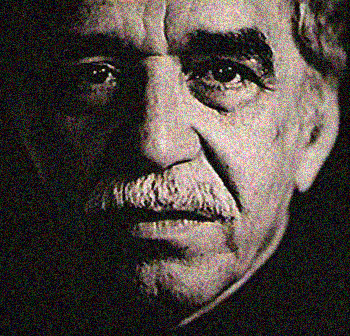 Re-reading Márquez for Cheltenham Literature Festival 2007
Love in the Time of Cholera, by Gabriel García Márquez
Penguin New Edition, as part of a reissue of the complete set of his novels.
No novelist since Proust has had a more acute sense of smell than Márquez . Penguin should have reissued these books with sprayed strips of paper interspersed between the leaves, like a perfumerie. The hot still air of his un-named Caribbean port , the ‘city of the Viceroys’, is enveloped by the ‘the tender breath of human shit, warm and sad’, against which his protagonists wear imported Cologne from Farina Gegenuber and the houses are filled with pots of heliotrope to perfume the dusk…
.
.
.
.
The Punishment Of Virtue, by Sarah Chayes
There has been a deluge of books in recent years that could be subtitled: “I fought with the Mujahideen and won.” The author, who is usually a foreign correspondent, will have first conspired at Greens Hotel in Peshawar, then slipped over the Afghan border in disguise and seen action at close quarters. After taking part in the fall of Kabul or Mazar-i-Sharif, the narrator will end his story with a pious reflection on how neither the British nor anybody else has ever been able to hold Afghanistan.
Sarah Chayes’s account is a welcome antidote to such tales of derring-do…
.
 .
.
.
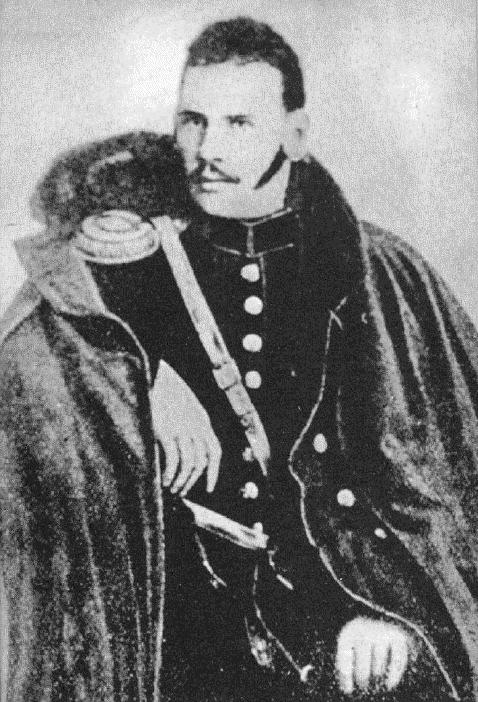
Anna Karenina, by Leo Tolstoy(translated by Richard Pevear and Larissa Volokhonsky)
‘Book of a Lifetime’
I first read Anna Karenina twenty years ago when travelling across the Peruvian desert on a long bus journey, and it has stayed with me ever since. The flatness of the desert, with looted and bleached bones from the Paracas tombs spilling right up to the highway, made a peculiarly complementary backdrop for Tolstoy’s tale as it played back and forth across the Russian steppe…
Despite his reputation as a thinker, it was the physicality of Tolstoy’s description of individual scenes which first attracted me: Oblonsky rolling his ‘full, well-tended body’ over the springs of a sofa as he wakes in the spare-room, exiled by his wife; the needles of hoar-frost against the black of Kitty’s gloves as she skates. It is this physicality that makes Tolstoy, like Gabriel García Márquez, translate so well.
..
.
.
..
.
The Ice Soldier, by Paul Watkins
Mountaineering books deal largely in failure. There is nothing climbers like so much as a good post-mortem of what can go wrong on a peak, from Nanga Parbat in 1934 to the disasters on Everest in 1996. Reaching a summit is anyway often a false ending: it is a commonplace of mountaineering that more lives are lost on the descent. Joe Simpson’s Touching the Void, the bestseller of the genre, is hardly a success story…
.
The Explorer’s Daughter by Kari Herbert
Too many recent books on polar exploration have been dull, survivalist accounts of how the author “got there” single-handed, at record-breaking speed. All too often they come home with a self-aggrandising tale of their own heroism. Sir Wally Herbert, who can lay claim to being Britain’s most eminent living explorer, would describe such journeys as “slam-dunk” affairs, where the value of discovery has been lost in the eagerness to be the fastest to an already-reached goal…
also see Hugh’s obituary for Sir Wally Herbert
.
Felipe Fernández-Armesto, Pathfinders: A Global History of Exploration
Robin Hanbury-Tenison (ed), The Seventy Great Journeys in History
Benedict Allen, Into the Abyss
The received history of exploration has always run as follows: Columbus and Vasco de Gama, fuelled by nationalistic ambition, a Renaissance curiosity about the world and good old-fashioned adventurism, kick-started a “golden age of discovery” that ran unbroken until the 19th century. In the process, the boundaries of the known world were extended immeasurably until the planet had been tightly girdled around, leaving slim pickings for any modern explorer today…
.
 Through Siberia by Accident, by Dervla Murphy
With each succeeding travel book, writers can lose some of the spring in their step. The enthusiasm that launched their careers turns to a weary plod as the next commission sends them on a further journey. Dervla Murphy happily disproves the rule. This is her 20th travel book, but it reads as freshly as if it were her first…
.
.
.
.
.
.
.
A taste of adventure on the road to Utopia
The best of 2004: travel books reviewed
This year has seen travel books flex their muscles, taking on all comers from politics and food-writing to the Taliban and the philosophy of utopianism. Like the best of film documentary, travel writing has the licence to mix genres and view the world from some unexpected and refreshing angles…
.
Fifty Years on: Everest Books 2003
Everest: The Summit of Achievement eds S Venables & J Wright
Everest: The Official History by George Band
Everest by Chris Bonington
Mountains of the Mind by Robert Macfarlane
.
.
.
In the welter of self-congratulation for the 50th anniversary of the climbing of Everest, it is easy to forget how fragile the British achievement was. John Hunt’s first summit team of two British climbers failed, partly due to his poor positioning of their final camp. Edmund Hillary and Tenzing Norgay were only the back-up, given their chance only because the New Zealander and the Sherpa had proved such a formidable load-carrying team on the approach. Tenzing had come close to summiting the mountain in 1952 with the Swiss, and would have been equally happy to have done so with them. Now he was simply finishing the job. The British were still struggling to work out which system of bottled oxygen worked best, closed or open circuit.
What really made the ascent possible was phenomenal luck with the weather – the best for many years – and the reconnaissance work done by Eric Shipton…
.
House of the Tiger King: a jungle obsession, by Tahir Shah
All of us, travel writers included, tend to pack too much baggage, intellectual or otherwise, when we set off on our journeys. Not Tahir Shah. He has made a literary virtue out of travelling light. For this latest quest, he sets off up the Amazon with not much more that a carrier bag full of Pot Noodles and a bottle of water, to help with the humidity and the drugs…
.
The Faber Book of Exploration by Benedict Allen (editor)
Explorers have always needed to write well. Unless they could beguile emperors or patrons back home with tales of their exploits, they were unlikely ever to get another commission, or to achieve any fame. Who now remembers Ney Alias, the British civil servant who travelled across 4,800 miles of largely unexplored territory between Peking and Nijni Novogorod in 1872, but left not a word behind?…